
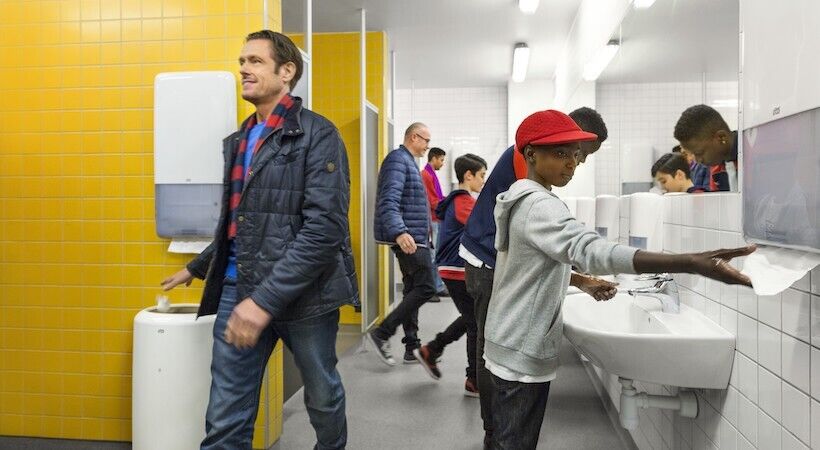
The toilets at summer outdoor events tend to be characterised by their dirty, unsanitary and unpleasant washrooms. At the start of the festival season and in the run-up to the 2026 FIFA World Cup, Stuart Hands from Tork manufacturer Essity considers ways of improving these facilities – and explains how the company is making the washrooms of one World Cup stadium more comfortable and inclusive.
The washrooms at stadiums and summer festivals are notorious for being overcrowded and unsanitary. Long queues for overflowing facilities that are rarely checked or cleaned are a common sight at such venues. Other regular gripes relate to dirty sinks and floors, bad smells and empty soap and paper dispensers.
According to various Tork surveys, poor washrooms ranked higher on people’s lists of stadium and festival negatives than factors such as crowd disorder and poor food and drink options. One study revealed that 44% of visitors avoided using the washrooms altogether when attending an open-air event.
And 20% said they deliberately refrained from drinking to avoid having to use the loo. Besides potentially leading to dehydration in hot weather, such a move will have a disastrous effect on the venue’s bar profits.
So, what makes summer event washrooms so problematical? And what can be done to improve them?
The sheer volume of people wanting to use the washrooms at once is a major issue. Peaks in traffic at half time or between acts create maintenance headaches for cleaners while also putting pressure on supplies of toilet paper, hand towels and soaps. And blockages could put some cubicles out of action, creating longer queues for those that remain in service.
Hand drying often leads to queues, particularly in a washroom where air dryers are installed. Some stadiums opt instead for supplying loose hand towels and leaving them on the units for visitors’ use. But these create a messy environment since visitors will pick up one or two in a hurry and perhaps drop others on the floor in their impatience to return to the action.
As queues start to form, frustration will mount - and some angry people may decide to vent their feelings through vandalism. This will create more mess and chaos for other washroom visitors.
So the entire day out will have been marred by queues, mess, unruly behaviour and run-outs of paper and soap. And this will result in dissatisfied customers who may choose to shun that particular venue in future.
How do managers turn this situation around and equip their washrooms in such a way as to reduce queues, minimise run-outs and improve the customer experience?
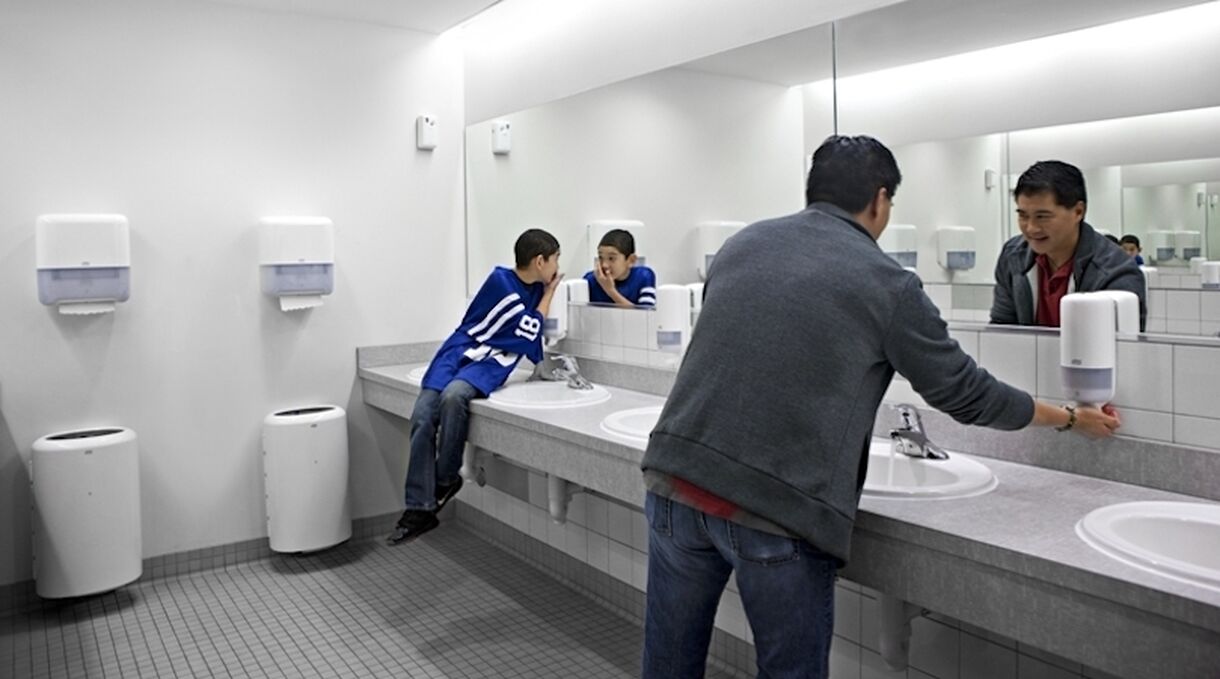
High capacity washroom dispensers that naturally reduce consumption will minimise the risk of dispensers running out between maintenance checks. All units should be quick to refill and easy to use to prevent queues and logjams. And they should be designed to reduce the risk of waste and mess.
Soap bars and bulk-fill soaps often result in sticky residues left behind on the basins while C-fold towels – which tend to come out of the dispenser in clumps – will lead to soggy discarded towels on the units and floors. And conventional toilet rolls are all too easy to throw around, leave on the floor to become soggy or drop down the toilet. These scenarios will lead to blockages, waste and mess.
The Tork SmartOne Twin Mini Toilet Roll System works well in stadiums because it comes in a sturdy, lockable dispenser that delivers one sheet of paper at a time. This helps to prevent runouts, vandalism and blockages while also reducing usage by up to 40%. A new roll can be inserted at any time to ensure a continuous supply while the SmartCore core removal system enables fast and easy refilling for staff.
Tork Foam Soaps are another good option because each cartridge caters for up to 1650 visitors, helping to reduce consumption by up to 50% compared with a liquid refill of the same size. This prevents runouts while the fact that the sealed cartridge can be replaced in seconds speeds up refilling.
A high-capacity hand towel dispenser will allow visitors to take a towel and move on, drying their hands as they go while freeing up the unit for the next user. The Tork PeakServe Continuous Hand Towel Dispenser caters for more than 1000 guests between refills and delivers each towel in just three seconds, reducing the user’s waiting time. And the dispenser has been designed to give out sheets of paper singly to avoid excess use and prevent run-outs.
Digital technology can further help to ensure that the dispensers in a busy event washroom are kept topped up at all times. Tork Vision Cleaning allows the cleaner to remotely check on which dispensers are running low via “connected” washroom dispensers. This allows them to top up the units at any time.
There is an increasing understanding that a poor washroom experience can completely ruin a customer’s event experience. Over the past few years, a growing number of festivals have started to offer VIP washrooms at an extra cost. For example, last year’s Latitude Festival Luxury Loo had a dedicated cleaning team and bespoke toiletries, while the superior washrooms at Lakefest featured a bar and a comfortable viewing platform.
A US event took this concept one stage further this spring by offering upgraded women’s washrooms for free. A period care brand sponsored the facilities at the Coachella Valley Music and Arts Festival in Indio, California, creating a Refresh Room which offered phone-charging stations, bag hooks, a perfume bar, mood lighting and music.
We at Essity have made our own bid to provide washrooms that offer more inclusive hygiene at events. This spring we partnered with the Eagles Autism Foundation to remodel three washrooms at Philadelphia’s Lincoln Financial Field incorporating adult changing tables, warm lighting, soothing music and higher dividers between cubicles and urinals for improved privacy.
Lincoln Financial Field is the home of the Philadelphia Eagles American football team with a stadium capacity of 70,000 fans. The washroom upgrades were implemented following feedback from stadium visitors, the Eagles Autism Foundation community and the Tork Coalition for Inclusive Hygiene.
The move reflects Tork’s commitment to advancing inclusive hygiene in public washrooms by addressing barriers to hygiene and creating solutions that support both people and the planet. By helping more people access hygiene comfortably it also supports stronger business performance and reputation.
The Tork Inclusive Hygiene in Public Washrooms Initiative received an Amsterdam Innovation Award at Interclean in April in the “Sustainability & Environment” category.
There are other ways in which stadium washrooms can be improved. All dispensers should be carefully positioned to allow for a quick throughput of visitors, for example. And a fragrancing system such as the Tork Constant Air Freshener will eliminate bad smells with its propellant-free technology that neutralises odours and lasts for up to 90 days before needing a refill.
Organisers are waking up to the importance of the summer event washroom and are working hard to improve the visitor experience. Hopefully this will continue and tomorrow’s stadium washrooms will offer a whole new level of comfort, inclusivity and care.
www.torkglobal.com