
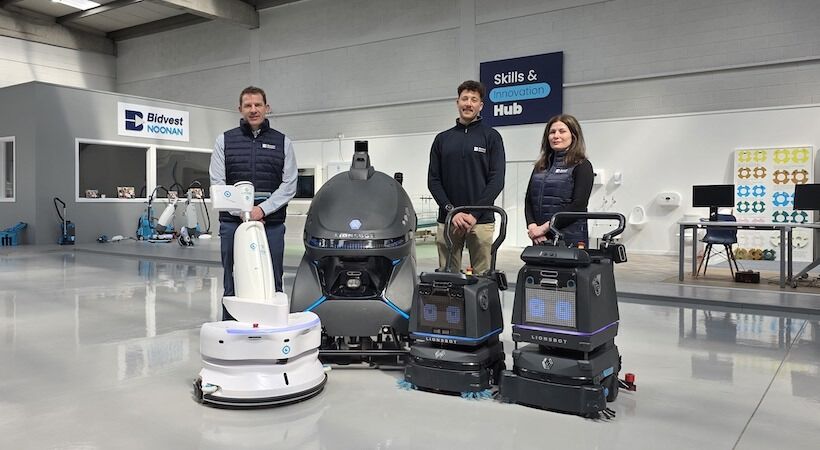
Peter Smyth, Director of Innovation & Technology at Bidvest Noonan, reports.
The cleaning robotics market has experienced remarkable growth, with a 34% increase in installations over the past year according to the International Federation of Robotics' 2025 report. But this isn't a story about technology replacing people. It's about collaboration, workforce development and creating better opportunities within the cleaning and facilities management sector.

From automation to collaboration
Modern cleaning robots represent a significant leap forward from their predecessors. Today's machines can sense their surroundings and adapt to unpredictable environments, making them viable across diverse settings. Shopping centres and university campuses deploy them for large floor areas, whilst compact machines handle daily office operations. Some facilities even use robotic lawnmowers working alongside human teams.
The key to successful implementation lies in viewing these machines as collaborative robots, or 'cobots', rather than replacements for human workers. Cobots handle repetitive, physically demanding tasks with consistency, whilst human teams bring judgment, adaptability and service quality that machines cannot replicate. This partnership allows cleaning professionals to focus on higher-value work that requires human expertise.
New roles and new opportunities
Far from reducing employment, the rise of cleaning robotics is creating new roles within the sector. Robot supervisors and operators are emerging as essential positions, ensuring machines run efficiently whilst applying human expertise where it matters most.
By removing the most physically taxing elements of cleaning work, organisations are making these roles more sustainable and attractive. Companies report improved staff well-being, higher retention rates and stronger team performance. This collaborative approach addresses the industry's ongoing challenge of workforce retention, making cleaning and FM careers more appealing to both current staff and new recruits.
Beyond operational efficiency
The benefits extend well beyond productivity gains. Modern cleaning machines can reduce environmental impact by up to 90% compared to manual methods, cutting carbon emissions, water consumption, chemical use and energy requirements.
These machines also generate valuable data that enables performance auditing. Facility managers can track metrics like task duration and resource consumption, supporting continuous improvement cycles and demonstrating value to clients.
The critical human element
Successful robotics programmes hinge on managing the human side of technological change. Training is critical. Organisations that invest as much in their teams as they do in their machines see the best results.
This human-centred approach may be the most significant innovation of all. It recognises that technology should support people, improve workplace safety and deliver better customer outcomes, rather than simply cutting costs.
Looking ahead
The FM industry remains in the early stages of robotics adoption, with cleaning leading the way, followed by grounds maintenance and security. The next evolution involves truly connected buildings, where sensors calculate space usage and deploy robots on an as-needed basis, occupancy sensors trigger cleaning schedule adjustments, and facility managers use digital twins to monitor and control machines remotely.
The organisations that will thrive are those adopting a holistic approach, integrating people, processes and technology. The 34% growth in cleaning robotics hasn't reduced job opportunities. Instead, it's fostering a new model of collaboration between humans and machines that enhances the workforce, improves service quality and creates a more sustainable future for the cleaning sector.
https://bidvestnoonan.com/