
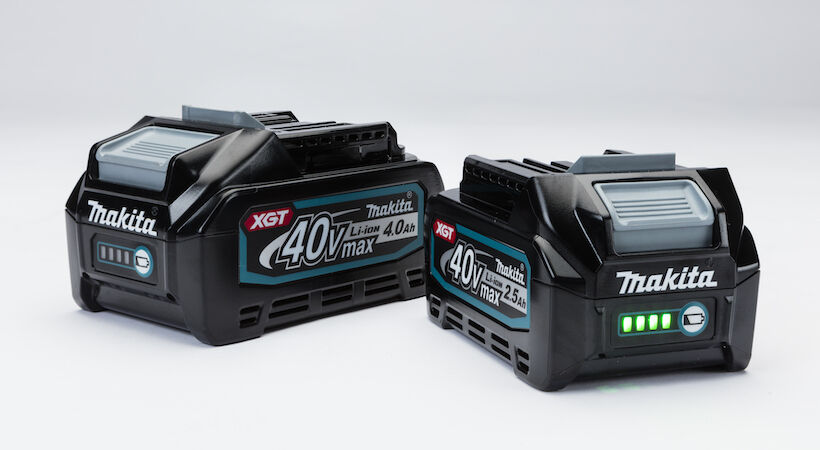
Lithium-ion batteries have become the industry standard energy source for cordless cleaning equipment thanks to their high energy density and power density. However, their price tag might drive professionals to opt for cheaper alternatives without being aware of the risks. Here, Tony Coleman, Technical Services Manager at Makita, explains why using only genuine batteries is crucial in ensuring user safety and product performance.
Online retailers and marketplaces have become the go-to for purchasing items quickly and with minimal hassle. However, it has unfortunately also made it easier for unvetted vendors to promote and sell poor quality replica or even counterfeit products. To the end user, many companies selling these replica, or sub-standard products appear legitimate and often sell through seemingly safe online marketplaces alongside the genuine versions, but at a far lower price.
With costs rising in all areas, it can be tempting to save money when expanding your kit by purchasing batteries at the lowest possible price online. The reality of this however, is that these products are often a poor quality, third party replica or non-genuine, fake product that appears as one from the manufacturer. Sadly, this is not a small issue as according to the campaign group Electrical Safety First (ESF), one in three people in the UK has inadvertently purchased a counterfeit electrical item online.
Safety
Cordless technology for cleaning equipment has made work easier and safer. Established manufacturers will have invested significantly into research and development to produce batteries that are tested to reliably deliver the performance, run times and charge times that professionals require. To achieve the high energy density of modern lithium-ion batteries, reputable manufacturers will precision engineer these batteries to control charge and discharge current, cell voltage and temperature. They will also ensure their ‘stability’ with rigorous safety checks. For example, Makita has engineered a unique battery monitoring system (BMS) for its battery packs.
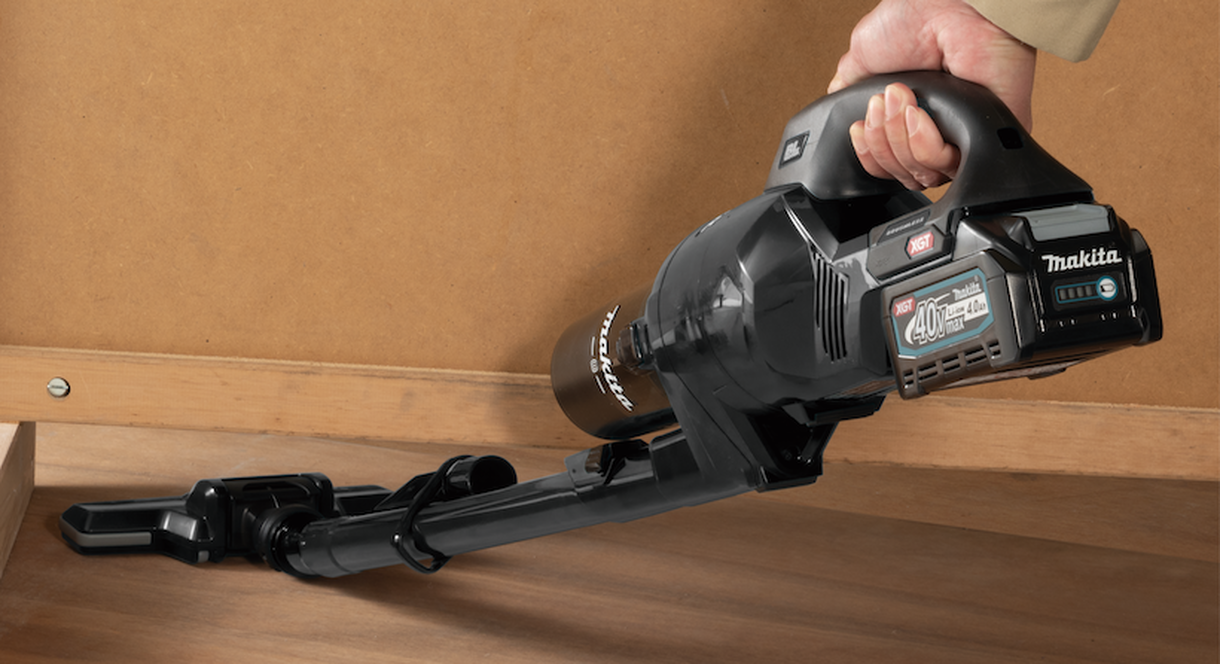
Counterfeit lithium-ion batteries are typically less expensive to manufacture because they do not go through this comprehensive design, qualification, stringent quality control, or supply chain management. Without designing and testing to the quality and safety standards required to comply with the assessments for CE/UKCA marking, the battery cells – and the user - are not protected against the risk of a “thermal runaway”.
Thermal runaway occurs when a battery cell overheats. This elevated temperature causes exothermic reactions causing the battery current to increase, producing more heat than can be dissipated, leading to a continuous temperature rise. The heat generated by the initial chemical reactions that release heat then affects the other battery cells in the same battery pack and causes further reactions creating a cycle where the temperature continues to rise uncontrollably, thus leading the cells into a thermal runaway. In these instances, the internal structure of the cell becomes unstable and collapses, resulting in the venting of flammable and toxic gases, fire, and potentially explosion. Not only can this damage the equipment, but the consequences can be devastating, posing great personal safety risk such as burns and damage to the eyes, or even fatal injuries.
Performance
Counterfeit batteries are not guaranteed to provide the same output and performance as genuine models. In many cases, a counterfeit seller will claim that the batteries have the same Amp hour (Ah) rating as genuine alternatives. However, in practice, without the necessary testing and accreditations in place, they may not provide a consistent power output and are likely to be far less powerful, or offer a lesser runtime and result in the machine not working at its optimum efficiency. This can have a knock-on effect on the user’s onsite productivity and efficiency and potentially damage equipment and tools.
Costs
It is clear that what may seem like a cheaper alternative can in fact become an expensive nightmare. Not only can the battery fail, but damage can occur to any cordless equipment where non-genuine batteries are applied. In such cases, the product warranty is typically voided, and the manufacturer will not cover repairs.
How to avoid being duped
To avoid falling victim to these products, there are two major factors to employ: 1) only shop from authorised dealers and distributors, and 2) if the price seems too good to be true, then it probably is. Where products are sold on well-known online marketplaces it can give buyers unwarranted confidence in the quality, however imitations are often sold in this way for this reason.
Inspect the appearance of the product and packaging. Counterfeit items may have spelling errors, variations in the logo design or signs that the logo has been copied from somewhere else. Also, genuine manufacturers will often include unique or difficult to imitate design features on their approved products, such as Makita’s trademark logo and the STAR connectivity mark on all Makita lithium-ion batteries. If these elements are missing, then it is counterfeit.
If the product does not match what is expected when it arrives then it should not be used. If there is any doubt about the authenticity, Makita offers an inspection service (with the proof of purchase of the battery) at its Factory Service Centres. Ultimately, do not use or charge the battery as the risks are clear.
http://www.makitauk.com/