
James Marston, Trainer and Inspector, British Institute of Cleaning Science, reports.
I remember some years ago if you had to stash something away, the cleaning cupboard was the place. The door was always open. I did not know any better back then. I suspect many people still don’t understand the importance of cleaning cupboards. Those who have their Licence to Practice certainly know and those working in them manage the space as best they can. Hopefully, more cleaning cupboards will become locked with access to trained staff only.
We often discuss cleaning cupboards matter at BICSc because we know if the cupboard is good, then the building is probably good too. We also know many organisations miss the opportunity that clean, well designed cupboards present. Some spaces are more challenging than others. Big or small, multiple uses such as long-term storage, everyday work equipment, the paint section, coats and personal items can leave little room for working. The list goes on. Whatever the space is, with all its challenges, it must be safe for cleaning operatives, allowing the best practice and highest standards possible.
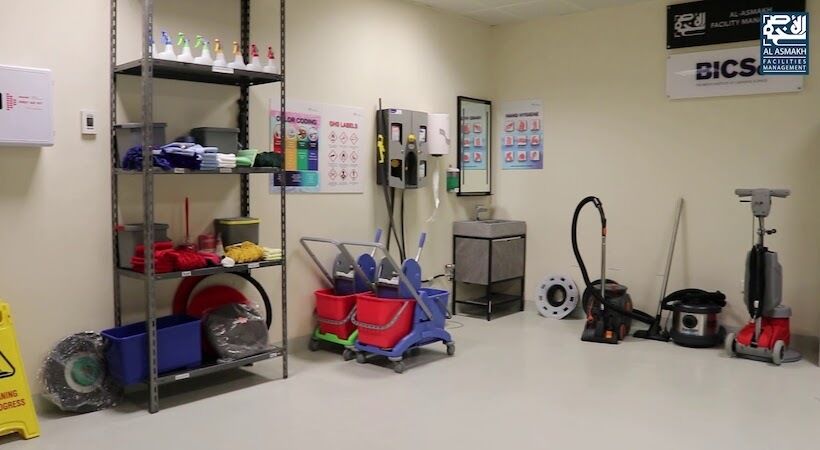
If organisations make cleaning cupboards their focus and create a workspace with clever design, good facilities and equipment, then it can be a catalyst for great change. This key space can drive systematic process and preparation for a productive day’s work by teams. One of my favourite sayings is: “If it’s easy to comply, then people will.” Good examples include mops stored on vertical surfaces either by hanging or clipped on the wall. Sinks, be it a sluice or Belfast design, installed at the right height will facilitate volumes of water from buckets and machines. Flat surfaces near the sink allow safe chemical dilution and equipment preparation. Storing on the floor creates slip hazards and unnecessary fatigue bending down constantly. Shelves should be non-porous, easy to wipe clean and safely accessible to staff.
Organisations often store chemicals and equipment for future use. Ventilation should be considered ensuring rooms remain dry and any chemical residue in the air is dispersed.
Above all, these storage areas should not affect the day-to-day spaces staff need to work effectively.
There are some great solutions out there whatever the space you have to store equipment and materials safely.
Whether newly created or in place, staff must be trained to understand storage objectives and key principles this space can promote. It’s where we store our equipment, wash our hands and don our PPE. Revise company policy documents such as COSHH, Risk Assessment and operating procedures. The dirt and bacteria we collect is disposed of here. Equipment is cleaned and prepared for next use. It is vital staff do not allow cleaning equipment to spread viruses and bacterial infections throughout the building or get infected themselves.
Empowering cleaning operatives to take responsibility and manage these critical rooms will keep standards high and risks low. All users should practice consistent product and equipment placement in storage. This way all will know where products are and how they are stored whichever cupboard they intend to use.
Cleaning operatives maintain and protect buildings and the users therein from illness and infection. They deserve a space to prepare and clean their equipment. A safe space to dispose of the dirt and bacteria they collect. Whatever it takes to create the best cupboard on site is a worthwhile pursuit which will underpin and drive the highest standards and safer buildings.
https://www.bics.org.uk/
About the contributor

James Marston
Trainer and Inspector
BICSc