Toilets that transmit cleaning alerts or that carry out health checks are just two of the latest incarnations of 'smart’ washrooms. But exactly how smart do these essentially functional facilities need to be, asks Jeremy Bennett from Tork manufacturer Essity?
Lavatories that monitor the user’s gut health by taking photos of stool samples are currently available in Japan.
The new Kohler toilets aim to tap into a vital source of health data and check for early signs of disease.
The pictures taken by the unit are uploaded to the cloud and analysed through algorithms, with the results being made visible via the user’s app.
This is just one of the many examples of “smart toilets” currently in use today. Meanwhile, a number of cities in the US are now installing Throne Labs which are self-contained units each containing more than 20 sensors. Use of these washrooms is virtually hands-free and access is gained via a QR code. Visitors are able to activate the sink, dry their hands and flush the toilet using an app while the sensors keep tabs on usage and cleanliness levels.
Technology in various shapes and forms is increasingly being employed in washrooms everywhere. But how smart does a toilet really need to be?
On the face of it, technology is a non-essential add-on in any washroom. The only real requirements of a loo is a fully-functional toilet plus the wherewithal to wash and dry the hands.
But if they are to be fit for purpose, public washrooms should also be easy to find and seamless to use with queuing kept down to a minimum. And if the facilities are attractive and pleasant to visit, this will be a decided advantage because an aesthetically-pleasing facility will enhance the reputation of the venue and potentially attract more custom.
Technology can be highly useful in keeping down queues and helping people to locate a toilet when they need one. It can also enhance the visitors’ experience and turn the facilities into a talking point – something that will improve the venue’s reputation and potentially help to gain more business.
Technology is proving to be particularly invaluable in helping people with access issues to find a suitable washroom. For example, the WheelMate app is designed to help wheelchair users to find suitable facilities while the Changing Places Toilet Finder app identifies the nearest changing places washrooms – facilities that incorporate extra space, an adult changing bench and a hoist.
Smart solutions are also being used to enhance the washroom environment by means of gimmicks and quirky technology. For example, hologram mirrors proved to be a major talking point when they were first introduced into the ladies’ washrooms of the California Katsuya sushi restaurant in Los Angeles some years ago.
Video games installed above pressure-sensitive urinals have also proved a hit in some gents’ toilets in bars and clubs. These allow washroom “gamers” to play virtual football, drive a car or operate a tank while using the loo.
And social media lit up when a bar in Preston installed a red button in the ladies’ which activated a sequence of flashing disco lights accompanied by Abba’s “Dancing Queen” when pressed. This enabled visitors to enjoy a swift “party in a toilet” and share the fun online.
But keeping a washroom clean, Instagram-friendly and in constant operation is a harder task than it might seem. Cleaners today are being stretched increasingly thinly and it can be hard for them to stay on top of any messes that may occur and ensure that all dispensers are being kept continually topped up.
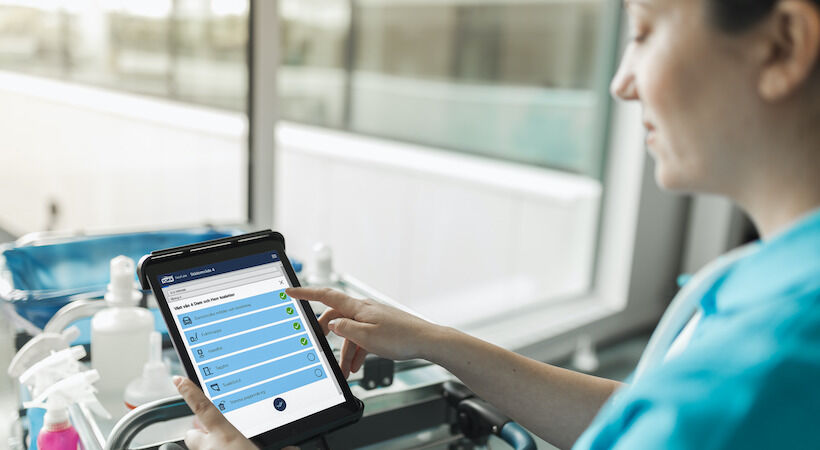
Here a digital system such as Tork Vision Cleaning can prove invaluable because it enables cleaners to remotely check on dispensers via a smartphone or tablet. This removes the need for staff to make multiple journeys to physically check on refill levels, saving time while also improving the cleaner’s working life.
Meanwhile, the new Kohler toilets that monitor the user’s gut health are by no means the only “wellness washrooms” around today. For example, Japanese company Toto offers the Wellness Toilet which uses seat sensors to record the user’s pulse and blood pressure.
The Rochester Institute of Technology in New York has developed a smart toilet that can track the user’s blood oxygen levels and other heart data. And the U-Scan by Withings is designed to gather health data from the user’s urine. The device provides nutrition tips and hydration advice while also allowing women to track their ovulation cycle.
Another way in which technology it proving useful is by increasing the sustainability of a toilet system. For example, developers are continually coming up with new solutions designed to save water, offset energy and recycle waste products.
One such example can be found at the University of Stirling where researchers have created a toilet connected to an anaerobic digester. This converts human waste into biogas which can be used as a clean cooking fuel and also for fertiliser when growing crops.
Meanwhile, an eco-friendly toilet developed at a South Korea university is offsetting energy bills and helping to grow plants on the university’s campus. Human waste is pumped into an underground tank where it is broken down by microorganisms and turned into methane and manure. The fertiliser is spread on the campus gardens while the methane powers the university’s ovens and boilers.
Another use of toilet technology is to allow washroom visitors to rate the facilities according to their cleanliness and efficiency. “Smiley” feedback panels that enable visitors to assess their washroom experience by pressing a red, amber or green button provide valuable data for washroom chiefs while also allowing them to respond immediately to any concerns.
Red/green traffic light systems situated outside washrooms are also increasingly being used to inform people when a cubicle is free. This helps to prevent queueing and makes washroom use more efficient.
There are many other uses to which technology is being put in the washroom. For example, some washrooms in Chinese shopping centres feature smart mirrors that allow women to virtually try on make up while waiting to use the loo.
Again in China, facial recognition technology is being used to limit people’s’ use of toilet paper and reduce over-consumption. The visitor’s face is scanned and that person is then prohibited from taking out any more paper for a seven-minute period.
So while technology is not strictly speaking necessary in the washroom, it is proving its worth on many fronts. It can be harnessed to enhance sustainability, drive up standards, monitor health and speed up washroom use. And this is making it a valuable aid in the smallest room.
https://www.torkglobal.com/gb/en
How smart does a washroom need to be?
Published 6th February, 2026 by Neil Nixon