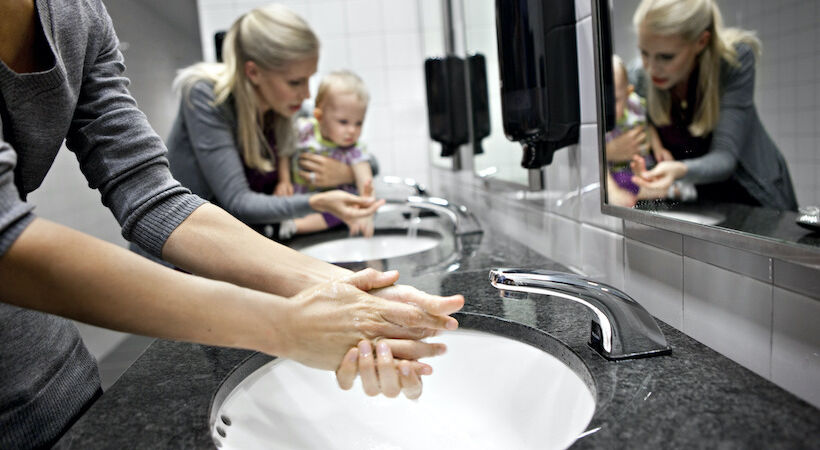
The news that more than 80 people fell ill after visiting a petting farm this spring underlines the importance of good hand hygiene when visiting these types of facilities. Lee Radzki from Tork manufacturer Essity looks at the importance of hand hygiene during the summer.
A trip to a Welsh petting farm over the Easter holidays ended in misery for 81 people. Soon after attending the animal feeding and petting sessions at the Glamorgan facility scores of visitors started reported symptoms such as stomach cramps, vomiting and diarrhoea. It emerged that these victims were suffering from Cryptosporidium, a parasite often linked to contact with young farm animals.
The UK has around 1000 petting farm attractions throughout the country which together receive around two million visits per year. Such facilities allow visitors to interact closely with animals and are particularly popular with young children.
But visits to petting farms are not without their risks, as the Glamorgan incident demonstrates. Cryptosporidiumis one of two common illness linked to farms, according to the National Farmers Union. The other is Shiga toxin-producing E. coli.
Both of these conditions are carried by animals such as cattle, sheep and goats and can cause serious illness particularly among the very young, the elderly and pregnant women.
Cryptosporidium is a microscopic parasite that lives in the intestines of infected animals and is passed out in their faeces. It can spread to water sources such as lakes and rivers, and may be transferred to the hands when touching the animal’s body. And once the bugs are on someone’s hands they can easily be transferred to the mouth – particularly when eating.
In 2024 the UKHSA investigated 16 outbreaks of cryptosporidium nationally linked to farm visits, resulting in many hundreds of infections. One large outbreak in the South East affected more than 400 people who had visited a lamb handling and feeding event.
The government issued an industry code of practice following a large outbreak of E. coli O157 linked to a farm in Surrey in 2021. The code suggests that adequate hand washing and drying facilities should be provided adjacent to areas of animal contact so that they can be used immediately after every visit.
Hand-washing prompts should be placed in prominent locations such as at the exits of animal contact areas, state the guidelines. Supervisors should also provide verbal reminders, while children should be urged to avoid eating while visiting the attraction. And since hand gels and wipes do not remove the bugs in the dirt they should not be used as a substitute for hand washing.
Keeping the hands clean and germ-free when out and about becomes more of a challenge in summer – particularly for families with children. But it is also becomes more crucial.
Many outdoor pursuits such as sand play, ball games and bug hunts involve getting the hands dirty. So the potential pathogens picked up from the ground need to be cleaned away before the child eats anything with his or her hands.
Eating outdoors is much more widely practised in the warmer months when food markets, pop-up stalls and burger vans appear in our town centres and resorts. During the summer, too, many people will head out for family picnics or will buy their offspring an ice-cream to eat al fresco.
The chances of falling ill from contaminated food increases in the hot weather as well because the hot and humid conditions create an ideal environment for germs to multiply. So washrooms with good hand-washing facilities should be widely available, particularly in outdoor attractions and beauty spots.
However, public toilets are likely to be packed during the summer months as large crowds gravitate to farms, beaches and other attractions. So steps should be taken to manage the queues and make hand-washing a seamless experience.
Queues will quickly form in washrooms where the facilities are slow to use or where the soap and paper supply has been allowed to run out. So in a washroom where summer crowds are likely to gather, managers need to install intuitive, ergonomic and high-capacity systems to speed up use and to reduce the risks of the units running out between maintenance checks. All dispensers for toilet tissue, hand towels and soap should also be easy for everyone to use.
Tork Foam Soaps provide a good hand washing solution because each long-lasting cartridge serves up to 1,650 visitors. The sealed cartridge can be replaced in seconds and a particularly low push-force is required to operate the dispenser which makes it easy for everyone to use while also speeding up access to soap.
Hand dryers can lead to long queues in a busy washroom since they require visitors to stand and wait for their hands to be thoroughly dried. A high-capacity dispenser will allow visitors to take a towel and move on, drying their hands as they go while freeing up the unit for the next user.
The Tork PeakServe Continuous Hand Towel Dispenser caters for more than 1000 guests between refills and delivers each towel in just three seconds, reducing the user’s waiting time. The dispenser has been designed to give out sheets of paper singly to avoid over-consumption, which means the supply will last for longer.
Digital technology can further help to reduce the risk of washroom runouts. Sensors placed in washrooms allow staff members to monitor usage and check on dispenser refill levels remotely via a smartphone or tablet. They can then target those washrooms where they know the soap and paper supplies to be running low or where excessive usage makes the need for cleaning more likely.
Systems such as Tork Vision Cleaning remove the need for cleaners to make multiple physical checks on the washrooms, saving them time and effort walking to and from each facility.
The warm weather makes some aspects of a summer washroom visit easier than a winter one. The fact that people wear fewer clothes in the summer helps to speed up queues and facilitate washroom throughput compared with the winter, when everyone tends to be wrapped up in coats and scarves. And people are more willing to practise good hand hygiene when their hands are not already cold from the winter frosts.
But hand hygiene is only viable when adequate supplies of soap and paper are made available and when the premises allow for a quick and easy access. Washroom providers therefore need to work hard to keep their premises up to scratch and ensure that families can enjoy the summer – while also keeping their hands clean and safe.
https://www.torkglobal.com/gb/en/